


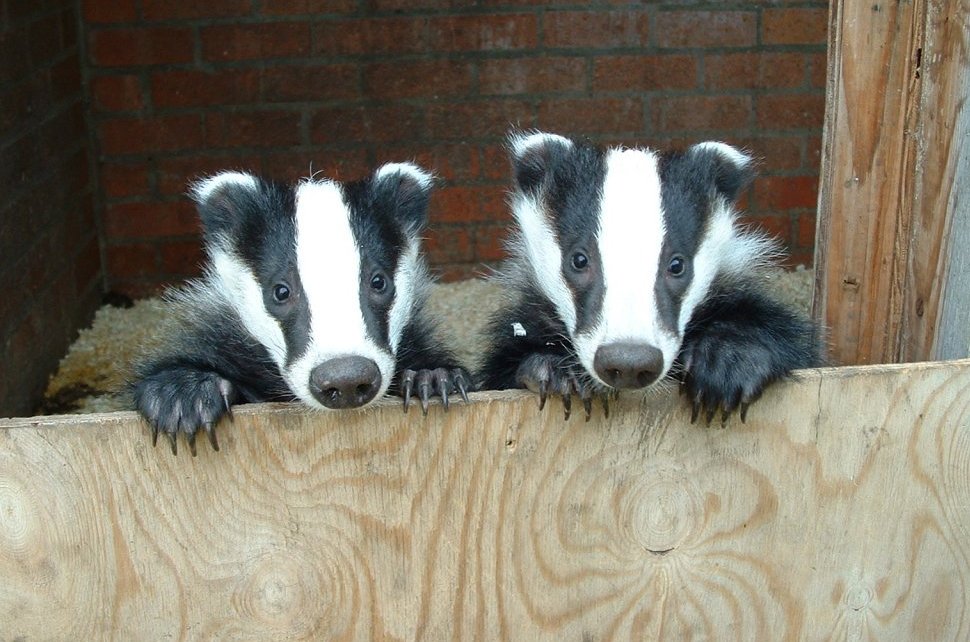
Badger cull begins in Somerset in attempt to tackle TB. A controversial badger cull in Somerset is under way despite protests, the National Farmers' Union has confirmed.

About 5,000 badgers are expected to be killed in controlled shootings over six weeks in Somerset and Gloucestershire, in an attempt to control TB in cattle.
Supporters say the cull is necessary to tackle bovine TB, which can be spread from infected badgers, but opponents say it is inhumane and ineffective.
Anti-cull campaigners staged a vigil overnight protesting against the cull.
It is understood the cull in Gloucestershire will start later this week.
In a letter to members, National Farmers' Union President Peter Kendall said: "I am writing to let you know that the first pilot badger control operations have begun.
"This is an important step not just for cattle farmers but for the whole farming industry.
"I know that many of you reading this will have suffered the misery of dealing with TB on farm - some of you for decades - and I hope now you will feel that something is finally being done to stem the cycle of infection between cattle and badgers.

"I hope that when time shows that these culls have reduced TB in cattle - just as has happened in Ireland - that even more people will understand that while sad, these culls are absolutely necessary."
'Completely unscientific'
But an activist from Forthampton near Tewkesbury, who would only give her name as Lynne, said the cull was "utterly unacceptable" and described it as the "extermination of the badger on British soil".
"We're planning a call-out of the whole country and expect people from all walks of life to come down to do all that they can to save lives," she said.
"There will be a mix of both interfering with the cull and protest walks wearing fluorescent vests."
Lynne said she did not believe the cull represented the democratic point of view and that it was "completely unscientific".
"Whether domestic or wild, they have a right to live as much as we do," she said.
"When badgers flee the cull zone, infected badgers may go into free zones."
Following the NFU announcement, Environment Secretary Owen Paterson said: "We know that despite the strict controls we already have in place, we won't get on top of this terrible disease until we start dealing with the infection in badgers as well as in cattle. That's the clear lesson from Australia, New Zealand, the Republic of Ireland and the USA.
"That is why these pilot culls are so important. We have to use every tool in the box because TB is so difficult to eradicate and it is spreading rapidly.
"If we had a workable vaccine we would use it.
"A vaccine is at least 10 years off." LIE
Some of the facts are agreed. Bovine TB is a terrible disease. It has a huge impact on the farmers affected and they are understandably desperate to find a way out of this nightmare. But we all have a responsibility to take action that will work.
To fight bovine TB, successive governments have implemented controls based on surveillance, testing and the slaughter of reactor cattle. But since the 1980s, the incidence of the disease has increased again – with a significant rise following the 2001 foot and mouth epidemic – although in recent times there have been some signs of levelling off.
The disease is transmitted between cattle, and between cattle and badgers, but what has dominated the debate is whether badger culling could be effective in controlling the disease. The last government decided to try and find out the answer.
The 10-year randomised badger culling trials – the Krebs trials – were overseen by the Independent Scientific Group on cattle TB.
Eleven thousand badgers were killed to discover what impact culling would have. The ISG’s final report, published four years ago, concluded reactive culling – killing badgers in areas where there had been local TB breakdowns – made the problem worse, and proactive culling – which involves taking an area of about 100 sq km and repeatedly culling badgers over a number of years – produced only marginal benefits because although TB was reduced in the area of the cull, it increased outside of the area because of the disturbance and movement of badgers.
While some scientists argue a prolonged cull over even larger areas – some 250 to 300 sq km – could reduce the incidence of bovine TB, the ISG’s judgment was the practicality and cost of delivering a cull on that scale meant badger culling could not “meaningfully contribute to the future control of cattle TB”
http://www.bbc.co.uk/news/uk-england-23845851
http://www.leftfootforward.org/2012/10/ ... ns-v-cull/
Having listened carefully to a wide range of views from scientists, farmers, veterinary and wildlife organisations, and many others, I decided that a cull was not the right approach. It was a view that has subsequently been endorsed by the Welsh Assembly government and by a group of distinguished scientists who wrote recently to The Observer.
The Welsh will not kill badgers