One man's search for diamonds
 Posted: Thu Jan 05, 2017 11:34 pm
One man's search for diamonds

During its 11-year-long civil war, Sierra Leone became famous for blood diamonds.
Rebel and government groups fought brutally over diamond-rich territory in the north of the country and funded themselves by selling the stones to international buyers.
Fourteen years after the conflict ended, diamond mining operations are still under way in the northern district of Kono.
A South African company, Koidu Holdings, runs a large mine that uses sophisticated machinery to blast through kimberlite and identify diamond-dense areas in the deep earth.
Nearby, artisanal miners line river banks, armed with sieves, spades and buckets.
One of these miners, Philo, has worked in Kono for the past 23 years, but was driven out during the conflict and lived in Guinea as a refugee.
When the war simmered down in December 2000, he returned home and started diamond mining again a year later.
Many artisanal miners will admit that they have not found a diamond in months and are desperately poor.
Yet in a country where there is 70% youth unemployment, mining at least provides some form of livelihood.
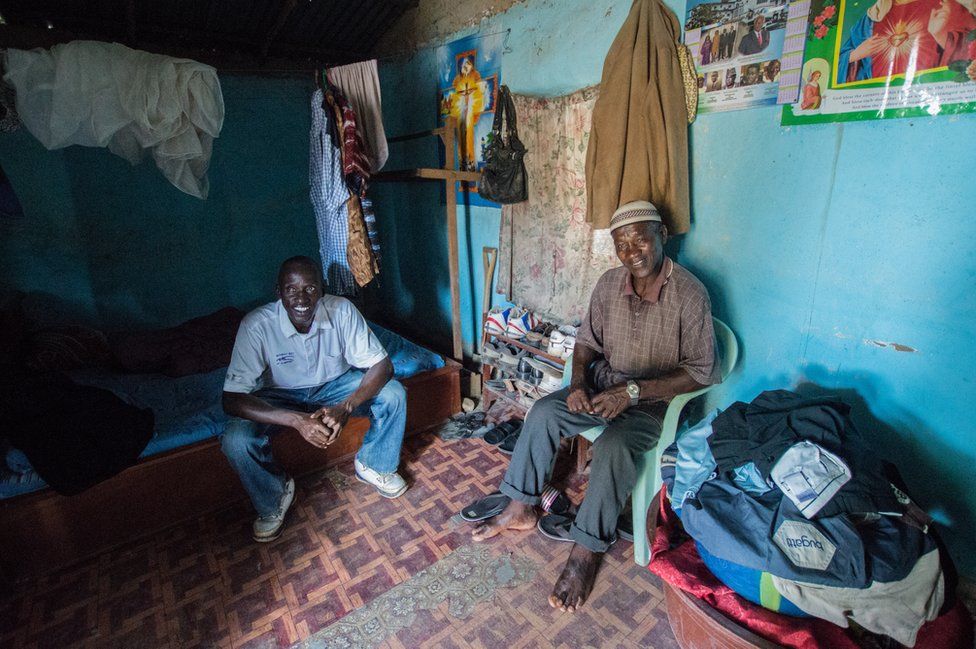
Back home, Philo relaxes in his room with his uncle.
During the conflict his mother was shot and killed by rebels, just outside the room in which he is now sitting.
His whole house was burned down and had to be rebuilt.
The following day Philo heads into Koidu town to sell his diamond in an office just off the high street.
The going rate is $3,200 (£2,520) for a carat that is 40% pure, and much less for gems of lower purity.
Philo obtains only $35 (about £28) for his find, but he is pleased as it is more than he had expected
Link to Full Article - Photos:
http://www.bbc.co.uk/news/in-pictures-38302289
During its 11-year-long civil war, Sierra Leone became famous for blood diamonds.
Rebel and government groups fought brutally over diamond-rich territory in the north of the country and funded themselves by selling the stones to international buyers.
Fourteen years after the conflict ended, diamond mining operations are still under way in the northern district of Kono.
A South African company, Koidu Holdings, runs a large mine that uses sophisticated machinery to blast through kimberlite and identify diamond-dense areas in the deep earth.
Nearby, artisanal miners line river banks, armed with sieves, spades and buckets.
One of these miners, Philo, has worked in Kono for the past 23 years, but was driven out during the conflict and lived in Guinea as a refugee.
When the war simmered down in December 2000, he returned home and started diamond mining again a year later.
Many artisanal miners will admit that they have not found a diamond in months and are desperately poor.
Yet in a country where there is 70% youth unemployment, mining at least provides some form of livelihood.
Back home, Philo relaxes in his room with his uncle.
During the conflict his mother was shot and killed by rebels, just outside the room in which he is now sitting.
His whole house was burned down and had to be rebuilt.
The following day Philo heads into Koidu town to sell his diamond in an office just off the high street.
The going rate is $3,200 (£2,520) for a carat that is 40% pure, and much less for gems of lower purity.
Philo obtains only $35 (about £28) for his find, but he is pleased as it is more than he had expected
Link to Full Article - Photos:
http://www.bbc.co.uk/news/in-pictures-38302289


